
The CI/CD-Native Alternative to Burp Suite
StackHawk delivers automated DAST and comprehensive API security testing, plus true CI/CD integration for scalable testing, source code-driven API discovery that reveals your complete attack surface before deployment, and developer-friendly workflows that enable same-day fixes—without the infrastructure overhead or manual configuration of Burp Suite.
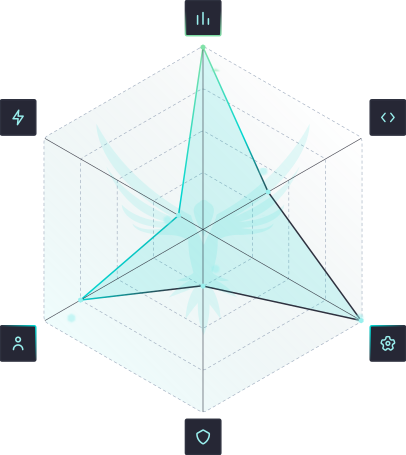
Why Choose StackHawk Over Burp Suite DAST?
StackHawk is the only true shift-left DAST platform that’s purpose-built to bridge the gap between security and development teams to enable secure software delivery at the speed of AI development. Unlike Burp Suite DAST, which evolved from a manual penetration testing toolkit with infrastructure requiring VMs, servers, and agents, StackHawk delivers security testing results in minutes through a lightweight Docker deployment. Our approach enables devs to find and fix vulnerabilities during development without specialized security expertise or complex infrastructure setup.
Trusted by the Following Flocks

Implementation Flexibility
Native CI/CD Integration
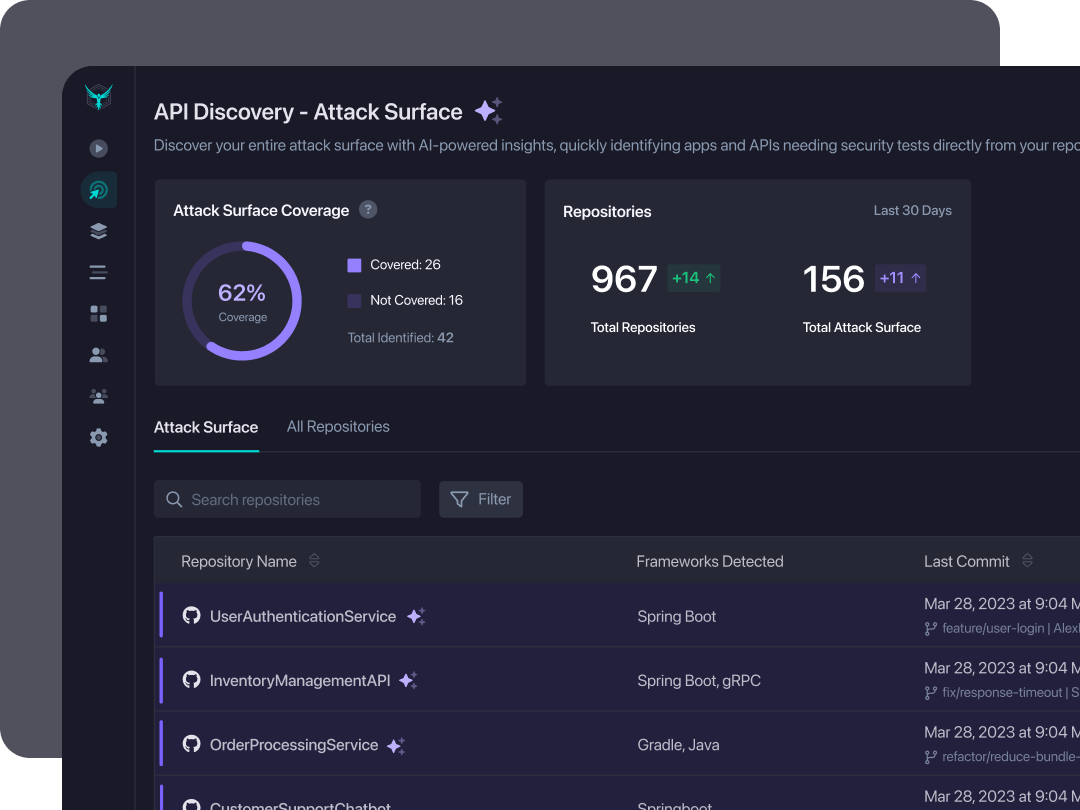
Source Code API Discovery
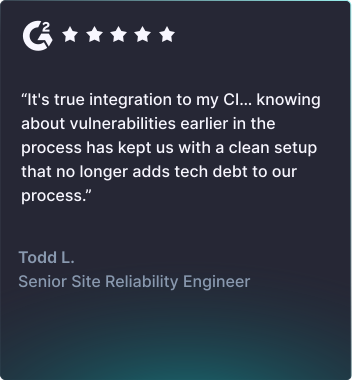
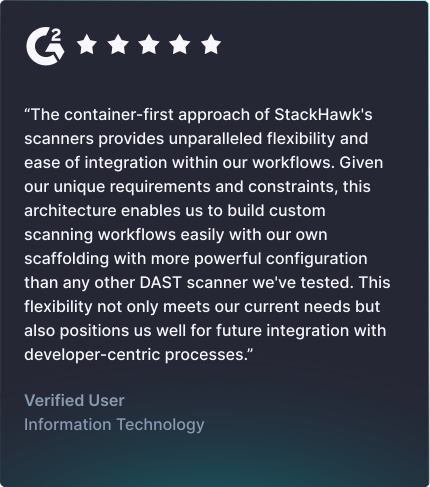
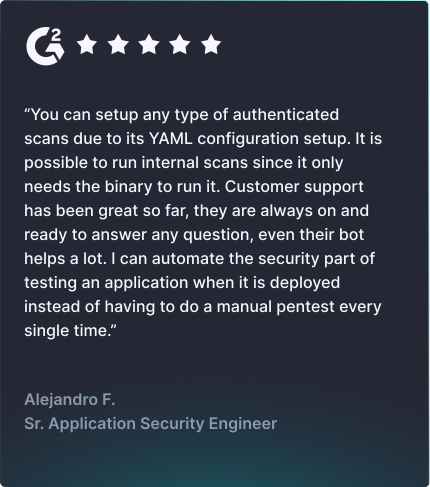
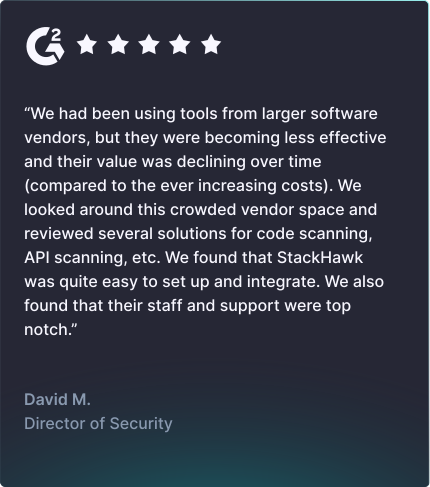
Kaakaws From Our Customers
Burp Suite vs StackHawk Feature Comparison Guide
Actionable vulnerability feedback integrated into every pull request with clear remediation steps that fit developer workflows
Security-focused reporting primarily delivered through HTML/PDF reports and XML exports; limited direct integration into developer workflows and pull requests
Source code-driven discovery finds internal and public-facing APIs before deployment, preventing exposure
Definition-driven only; no shadow API detection, source code analysis or gateway integration
Comprehensive testing for all API types: REST, SOAP, GraphQL, and gRPC
Scans REST APIs and GraphQL support requires introspection to be enabled
Native pipeline integration across all major platforms with scans that complete within standard build times
Supports CI/CD integration but scans typically require longer execution times that may not align with standard build pipelines
Deterministic tests support detection of complex business logic flaws with full transparency and customization
Relies heavily on third-party extensions (Autorize, AuthMatrix, Auth Analyzer) for comprehensive authorization and business logic testing; limited native business logic vulnerability detection
Frequently Asked Questions About StackHawk and Burp Suite
Isn't Burp Suite the "gold standard" for application security testing?
Burp Suite Professional is absolutely the gold standard for manual penetration testing and security research. However, Burp Suite DAST (their enterprise automated offering) represents a different use case: it operates as an isolated security testing solution that requires dedicated security engineers to configure and manage each application individually. This architecture works well for thorough, periodic assessments, but becomes a bottleneck when you need to test dozens or hundreds of APIs at the pace of modern development. StackHawk was purpose-built from day one for automated CI/CD testing, which is why teams shipping code daily typically find our approach more practical than trying to automate a tool designed for manual analysis.
What about Burp's research-driven innovation and low false positive rates?
Burp Suite’s PortSwigger Research team does pioneering work discovering new vulnerability classes—that’s genuinely impressive and valuable to the security community. However, the question isn’t whether Burp finds accurate vulnerabilities; it’s whether their security-team-centric workflow fits teams that need developers to own security testing at development velocity. StackHawk delivers high-confidence findings through runtime exploit verification, and our approach of testing in CI/CD means developers can quickly triage any findings themselves while code context is fresh.
Can StackHawk handle the complex authentication flows that Burp excels at?
Yes. StackHawk handles OAuth, JWT, SAML, and multi-factor authentication through YAML configuration with auto-renewal and session management built-in. For complex multi-step authentication, we support custom scripts and advanced configuration. The key difference: Burp requires security expertise to configure authentication through its UI and proxy manipulation, which can be brittle, while StackHawk enables developers to configure reliable auth-as-code using familiar YAML syntax. Both can handle complex scenarios; StackHawk makes it accessible to developers without specialized security training. And it scales!
How does pricing compare between StackHawk and Burp Suite?
StackHawk uses transparent per-developer pricing with unlimited applications and scanning—predictable costs that scale with team growth, not application count. Burp Suite offers Professional at $475/year per user, while Burp Suite DAST uses pay-as-you-scan models or custom enterprise licensing, averaging thousands of dollars annually. For organizations with many microservices or frequent scanning needs, StackHawk’s unlimited model typically provides better value than usage-based pricing.
Hello flexible security testing, goodbye infrastructure overhead
See StackHawk in Action
Schedule a 30-minute live product demo with expert Q&A

For more information about how StackHawk handles your personal data, please see our Privacy Policy.